%207.svg)
%202.svg)
%201.svg)
%203.svg)
%204.svg)

%206.svg)


%205.svg)


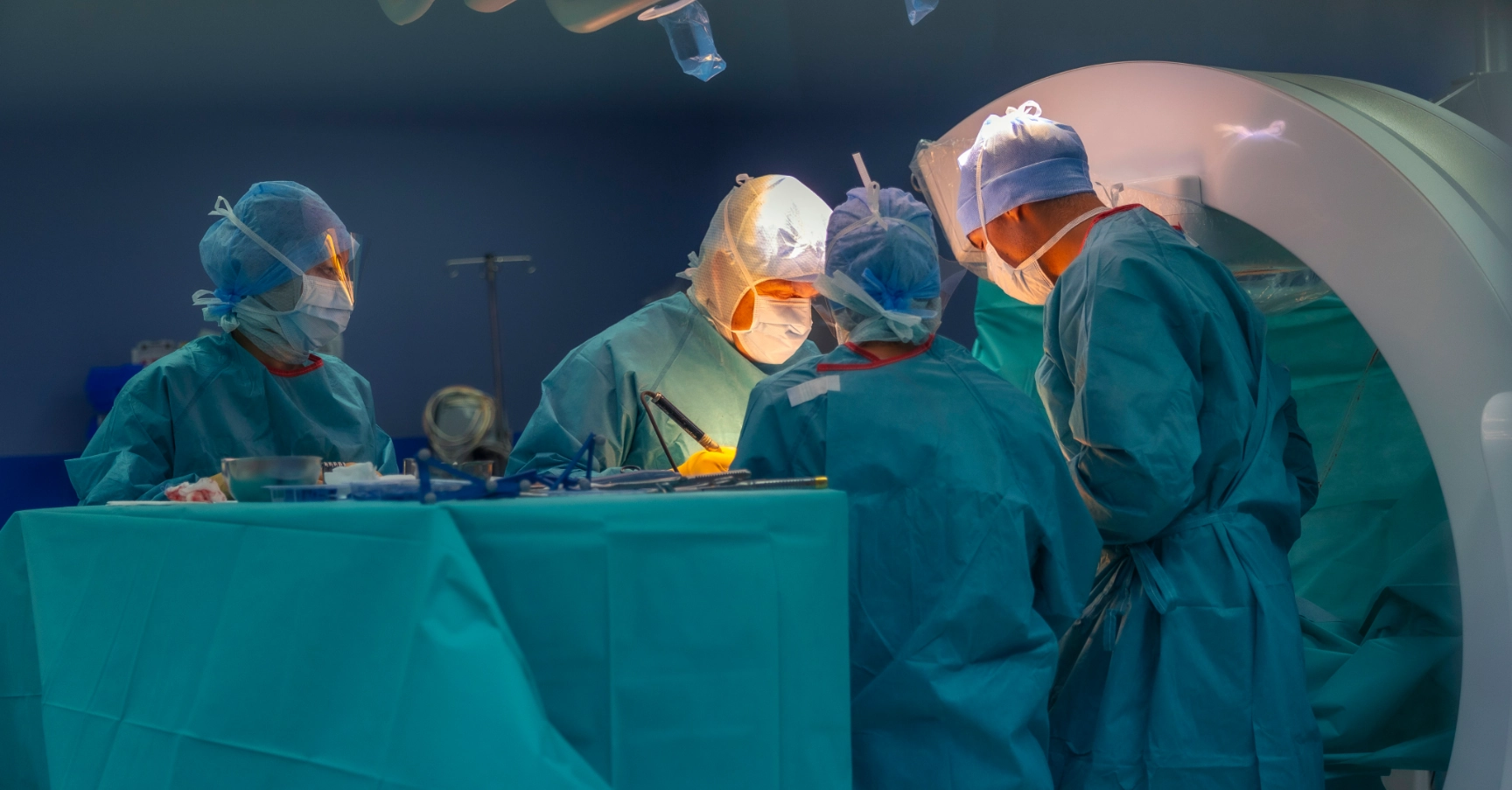

We present a video illustrating the use of an ultrasonic knife (bone scalpel) in single-port endoscopy to perform L4-L5 recalibration in a 74-year-old patient with symptomatic lumbar spinal stenosis.
Clinical context
This 74-year-old patient had been experiencing the following symptoms for one year:
• limping in the lower limbs when walking
• a gradual decrease in walking range
• Relief when sitting or bending forward
MRI showed a narrowed lumbar canal at L4-L5, of degenerative origin.
After conservative treatments (medication, rehabilitation, injections) failed, lumbar recalibration at L4-L5 was recommended.

Use of a bone scalpel in single-port (fully endoscopic) lumbar surgery
Technique: Bone Scalpel in single-port endoscopy
The unique feature of this procedure is the use of an ultrasonic bone scalpel in single-port endoscopic surgery.
The integration of this instrument into an endoscopic environment allows:
• Fast and precise bone sectioning
• a clean, even, and controlled cut
• a major limitation of bone bleeding
• better endoscopic visibility
• increased safety with regard to nerve structures
The surgery lasted 45 minutes, with virtually no intraoperative bleeding.
The patient is helped to stand up as soon as they return to their room, with minimal post-operative pain, and is allowed to return home the same day (outpatient surgery).
Physical therapy rehabilitation will begin 15 days after surgery.
The combination of bone scalpel and single-port endoscopy optimizes the quality of the recalibration while maintaining the advantages of minimally invasive surgery: sub-centimeter incision, muscle preservation, and rapid recovery.
Objective of L4-L5 recalibration
Lumbar recalibration aims to:
• widen the lumbar canal
• release compressed roots
• improve neurogenic claudication
• Restore satisfactory walking range
Surgical video
The video shows:
• Single-port endoscopic approach at the L4-L5 level
• use of the bone scalpel for bone resection
• enlargement of the lumbar canal
• final decompression of the nervous structures
This case illustrates the evolution of minimally invasive spinal surgery techniques, combining technological innovation and endoscopic precision in the treatment of lumbar spinal stenosis.