%207.svg)
%202.svg)
%201.svg)
%203.svg)
%204.svg)

%206.svg)


%205.svg)


Clinical background
This 35-year-old female patient presented with:
• neck pain radiating to the left upper limb
• paresthesia in the C6 area
• a motor deficit confirmed by clinical examination
• Significant functional impairment despite appropriate medical treatment
Cervical MRI revealed a left C5-C6 foraminal disc herniation, causing significant radicular compression.
Given the deficit and the failure of conservative treatment, surgical intervention was indicated.

Left C5-C6 cervical hernia, full endoscopic
Technique
Single-port endoscopic cervical discectomy
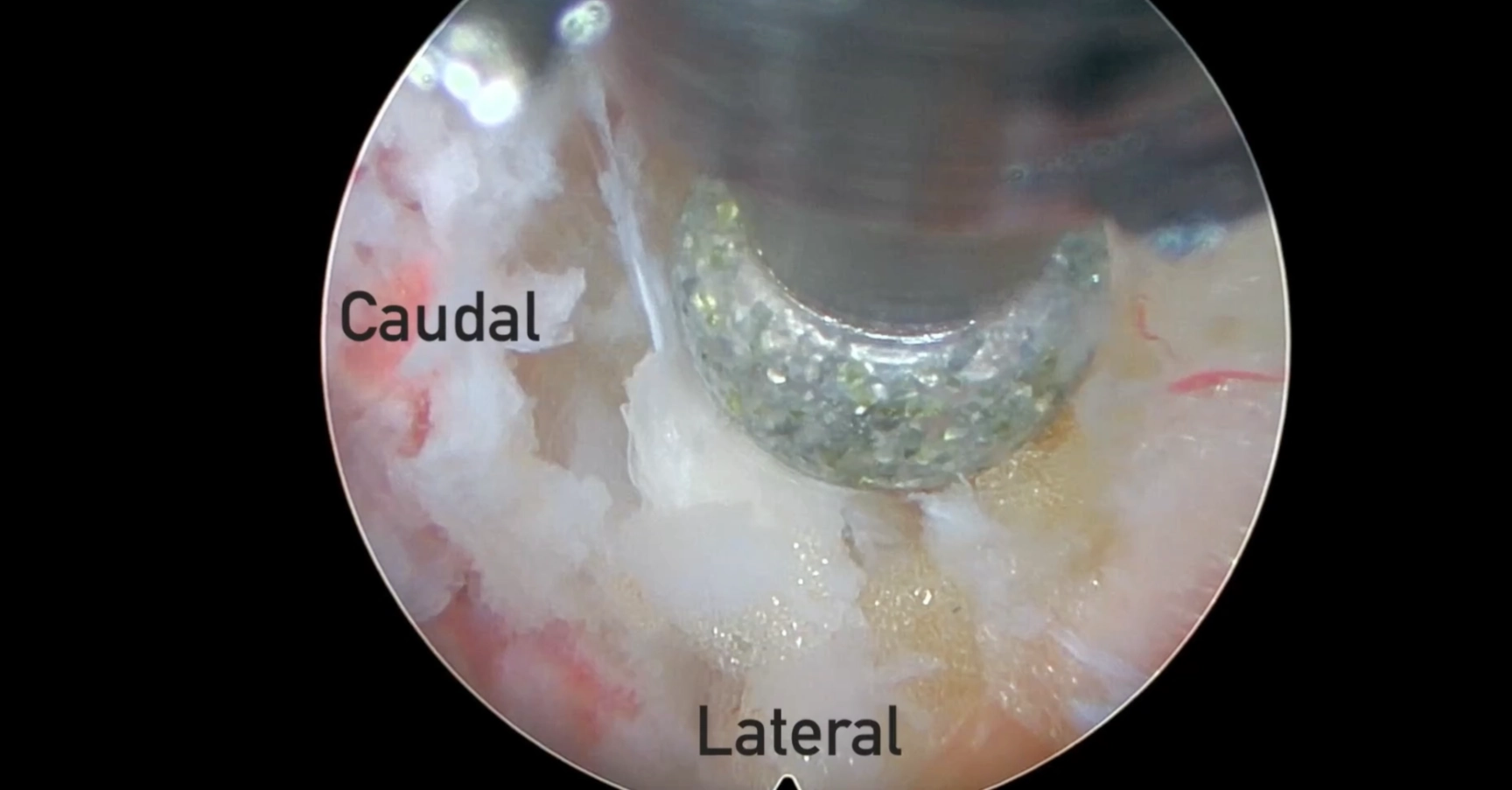
The procedure was performed using single-port cervical spinal endoscopy, allowing:
• a sub-centimeter incision
• a targeted approach to the left C5-C6 foramen
• high-definition visualization of the C6 root
• Selective removal of the herniated disc
• Complete decompression of the nerve root
This minimally invasive technique allows for precise decompression while preserving muscle and ligament structures.
Postoperative care
• Get up on the day of the procedure
• Limited post-operative pain
• Short hospital stay with discharge the following day
• Gradual resumption of activities
Radicular pain usually improves rapidly after decompression.
Surgical video
The video shows:
• Endoscopic approach to the left C5-C6 foramen
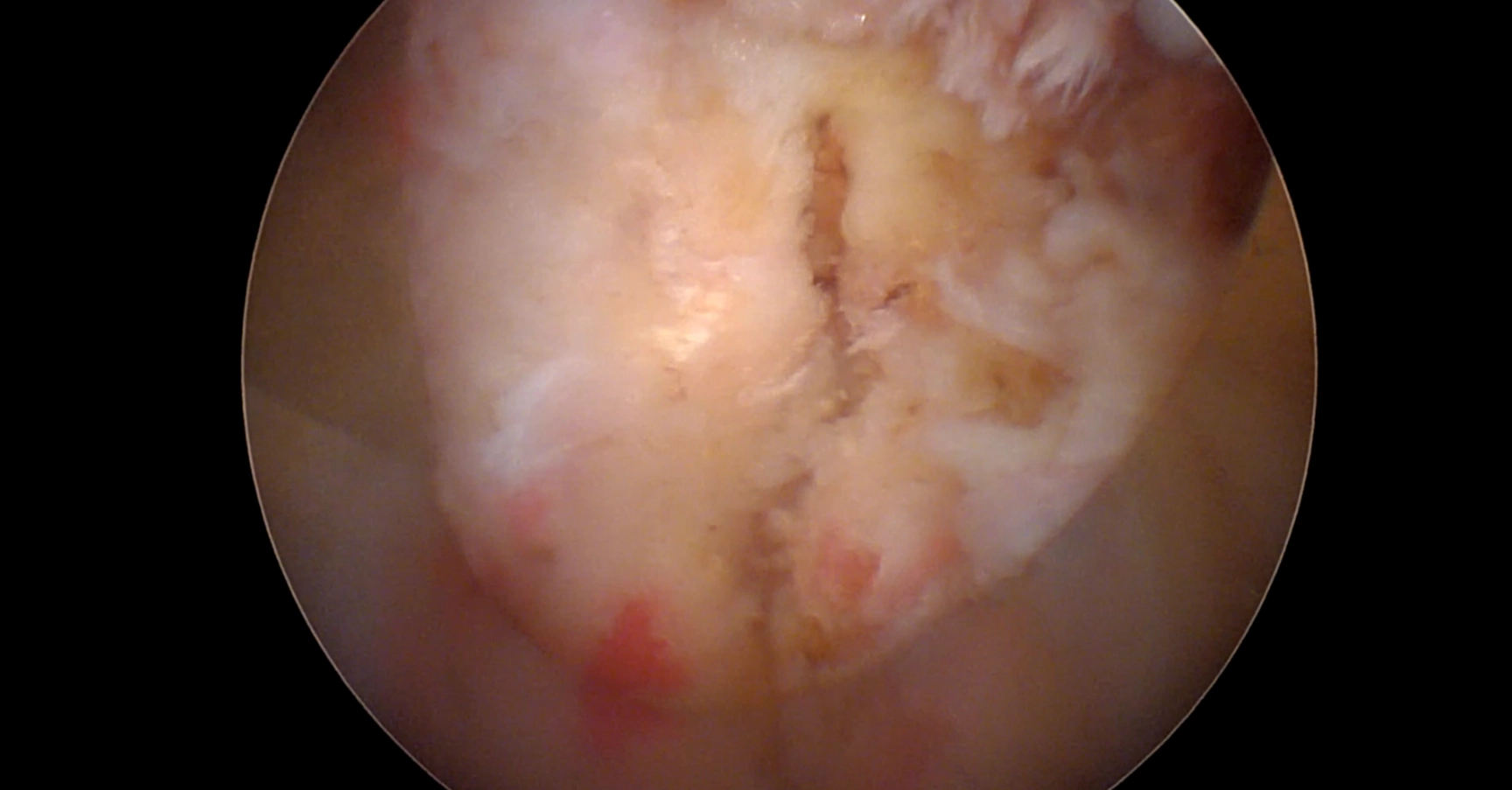
• identification of the compressed root
• extraction of the foraminal disc herniation
• final release of the C6 root
This case illustrates the effectiveness of minimally invasive endoscopic cervical spine surgery in the treatment of foraminal disc herniations causing deficit, hyperalgesic cervicobrachial neuralgia, or those that do not respond to conservative treatments.